


Ships worldwide. This piece is held at our workshop and ships internationally.
One of a kind
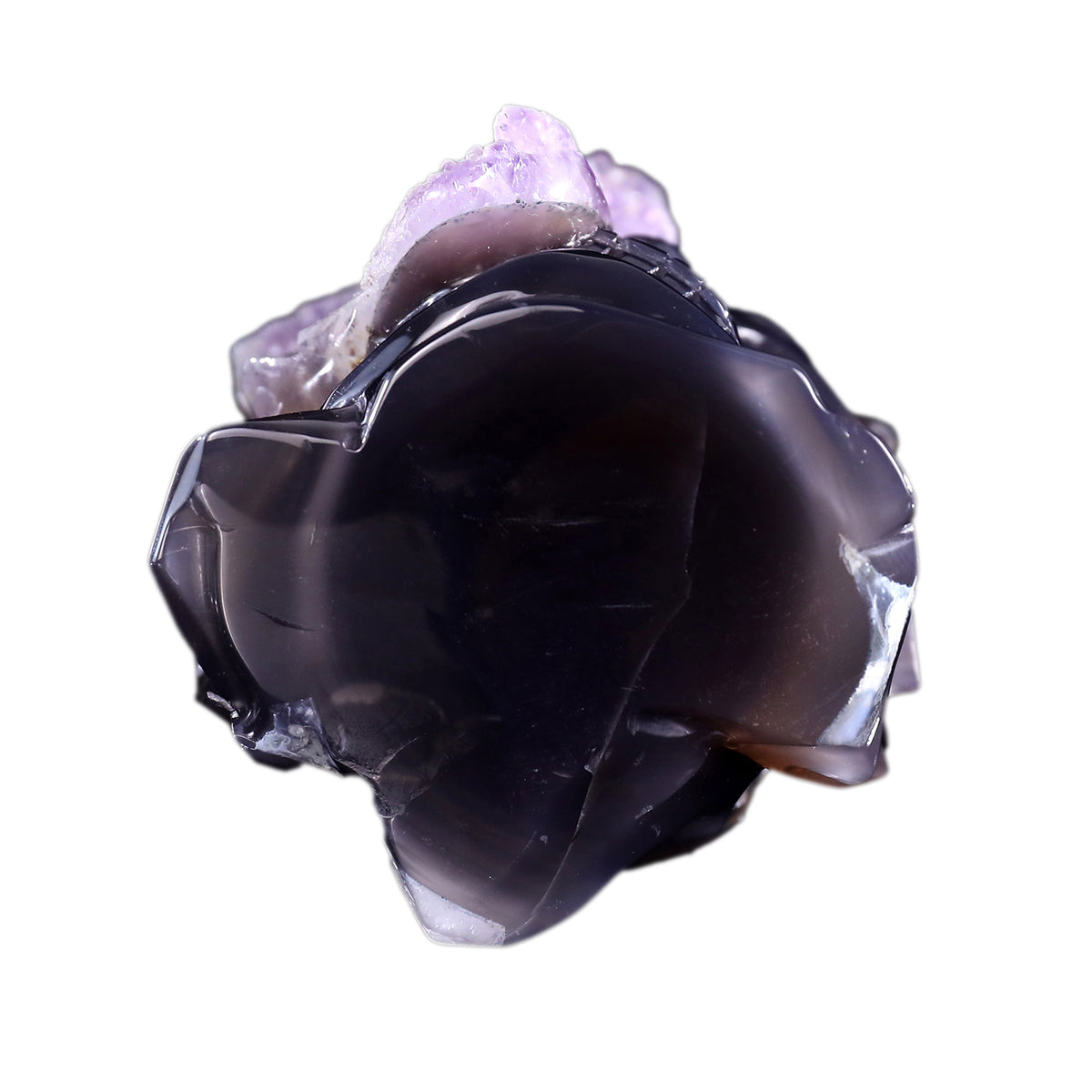
Every carving is cut from its own block of rough. The photographs on this page show the exact piece you will receive — not a sample from the same batch.
Natural stone, untreated
100% natural stone, never dyed or reconstituted. Veins, inclusions and small shifts in colour are how the material formed; they are marks of origin rather than faults.
Carved by hand
Cut, shaped and polished by hand. Proportions differ a little from piece to piece because each one follows the block it came out of.
Checked and packed
Hand-inspected before dispatch and shipped in shockproof packaging.

Clarity & Intuition
Amethyst is traditionally associated with the crown and third-eye chakras, and is believed to support the kind of sustained attention that tends to come before insight.
Hold it at the start of meditation, or set it where you sit to think without a screen.

Restraint & Balance
The Greek association is with clear-headedness, and modern practice keeps it: amethyst is said to support the pause between an impulse and the action.
Keep it in view wherever you make the decisions you tend to regret in the morning.

Cleansing a Space
Amethyst clusters are among the most common stones kept for space clearing, traditionally set where a room needs its atmosphere reset after a long week.
Place it on a windowsill that catches morning light, or in the room you go to when you need to reset.

Sleep & Dreaming
It has a long folk history at the bedside — believed to support deep, undisturbed sleep and to be the stone of vivid, memorable dreams.
Set it on the nightstand, and keep a notebook nearby for whatever you remember.

Why We Carve Into Geodes
Carving a skull around an open crystal pocket means letting the void decide the composition. The cavity was there long before the carver was, and the form has to be built around what the stone was already hiding.
Set it so the opening catches a light source; the interior is the point.