-
2.5" Chalcedony Hand Carved Crystal Dragon Skull
Regular price $59.46 USDRegular priceUnit price per -
3.0" Yooperlite Hand Carved Crystal Dragon Skull
Regular price $92.65 USDRegular priceUnit price per -
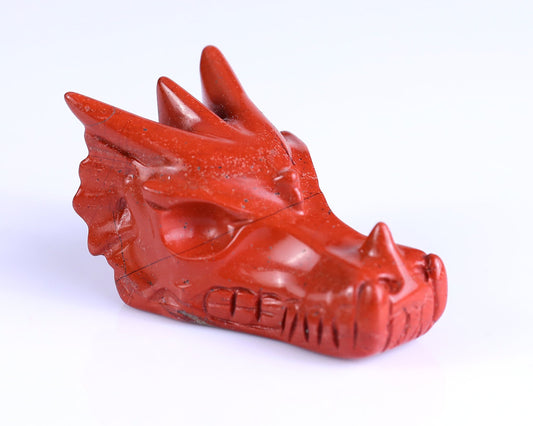
3.0" Red Jasper Hand Carved Crystal Dragon Skull
Regular price $59.46 USDRegular priceUnit price per -
2.5" Red Jasper Hand Carved Crystal Dragon Skull
Regular price $42.46 USDRegular priceUnit price per -
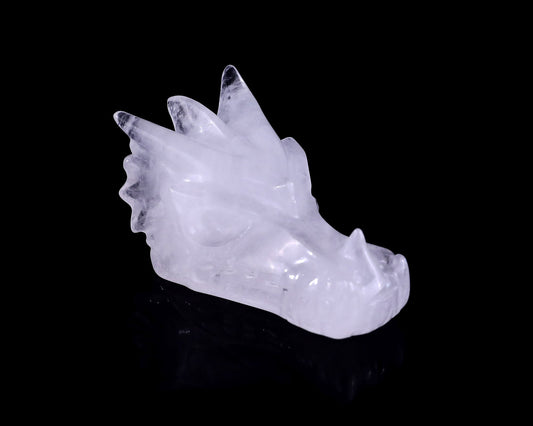
3.0" Angolan Quartz Hand Carved Dragon Skull
Regular price $50.96 USDRegular priceUnit price per -
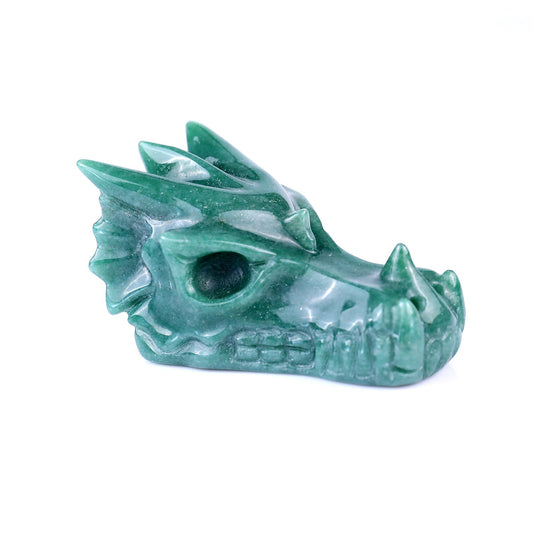
3.0" Green Aventurine Hand Carved Dragon Skull
Regular price $42.46 USDRegular priceUnit price per -
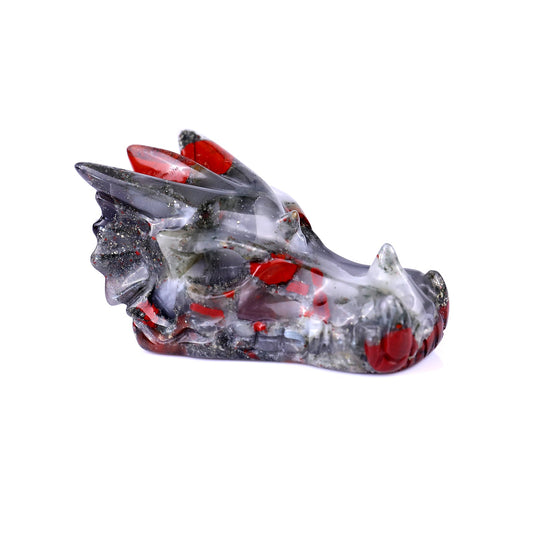
3.0" African Blood Stone Hand Carved Dragon Skull
Regular price $42.46 USDRegular priceUnit price per -
3.0" Agate Hand Carved Crystal Dragon Skull
Regular price $42.46 USDRegular priceUnit price per -
3.0" Leopard Skin Jasper Hand Carved Dragon Skull
Regular price $42.46 USDRegular priceUnit price per -
3.0" Blue Aventurine Hand Carved Dragon Skull
Regular price $42.46 USDRegular priceUnit price per -
3.0" Sakura Agate Hand Carved Crystal Dragon Skull
Regular price $42.46 USDRegular priceUnit price per


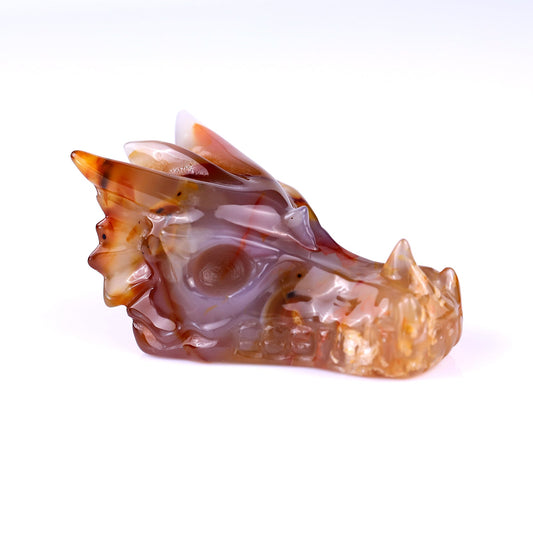

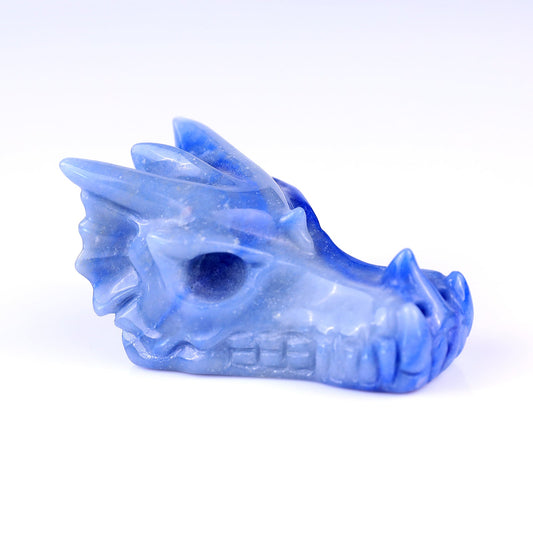
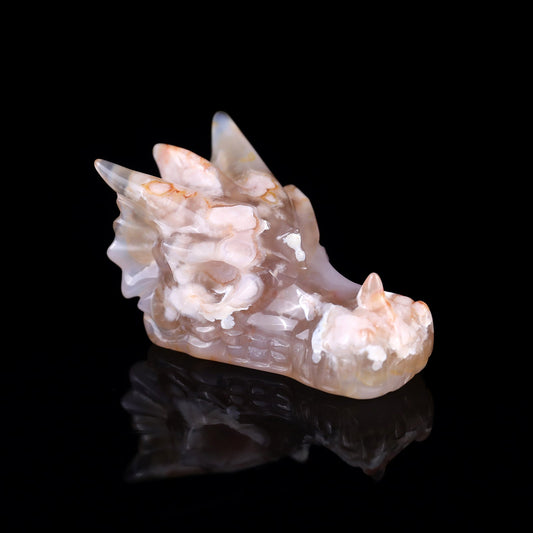
What Is a Crystal Dragon Skull?
A dragon skull is a carving of a creature that never left a fossil behind. There is no reference specimen to copy, so every carver answers the same questions differently — how far the brow ridge juts, whether the jaw reads reptilian or leonine, how far back the horns sweep. What you are choosing is one carver's argument about an animal that exists only in stories.
The dragon skulls in this collection are cut and finished by hand from natural stone: amazonite, red jasper, sakura agate, yooperlite, blue chalcedony, leopard skin jasper and a dozen others. Most stand 2 to 3 inches — sized for a desk, a shelf or the palm of your hand rather than a mantelpiece.
Because each piece begins as its own block of rough, the banding, inclusions and colour never repeat. Two dragon skulls carved to the same pattern from the same material will still not match, which is usually the point.
Choosing a Dragon Skull
What buyers usually want to know before deciding.
Why do people keep a dragon skull carving?
Two reasons, and most collectors have both. The first is plainly aesthetic: a dragon skull is small sculpture, and the form holds more character than a sphere or a tower. The second is symbolic. In both European and East Asian tradition the dragon is a guardian — of hoards, of thresholds, of water and weather — and a skull is the part of any creature that outlasts it. Read together, the two are traditionally taken to stand for endurance rather than for death.
What is a dragon skull believed to represent?
It depends which tradition you draw from. In Chinese symbolism the dragon is auspicious and benevolent, tied to water, rainfall and imperial authority — a bringer of fortune rather than a monster. In European folklore it is formidable and hoard-guarding, something to be reckoned with. Carved as a skull, both readings arrive at the same idea: what remains once the story has ended. Owners often keep one as a reminder of nerve held under pressure.
Which stone should I choose?
Choose on colour and character first, since you will be looking at it every day. If you also want the traditional associations, the ones most often given for the stones here are: amethyst for calm and clear thinking, rose quartz for warmth and self-kindness, red jasper and African bloodstone for steadiness and stamina, green aventurine for luck and new ventures, blue chalcedony and blue aventurine for composure and speaking plainly, and tiger iron for grounded resolve. Yooperlite is the outlier — it is chosen for its sodalite veins, which fluoresce orange under UV light.
How large are these carvings, and where do people put them?
Most measure 2.0 to 3.0 inches — roughly the size of a large egg, and light enough to lift one-handed. That scale suits a desk, a bookshelf, a windowsill or an altar, and it travels well. If you want the carving to be noticed, place it where light rakes across it from the side; flat overhead lighting washes out the tooth and horn detail that the carver spent the most time on.
Is every dragon skull different?
Yes, unavoidably. Each starts as a natural block with its own banding, veining and inclusions, and each is shaped by hand rather than moulded, so proportions vary a little between pieces. The photographs on every product page show the exact carving you will receive, not a stand-in from the same batch. Small natural marks — a mineral inclusion, a slight variation in the polish — are characteristic of hand-worked stone rather than faults.
How do I clean and care for a crystal dragon skull?
Dust it with a soft dry cloth, using a soft brush for the tooth and horn detail. If it needs more than that, wipe it with a barely damp cloth and dry it straight away; do not leave carvings soaking, as some porous stones take up water. Keep amethyst, rose quartz and other coloured quartz out of prolonged direct sunlight, which can fade them over months. Display it somewhere it cannot be knocked onto a hard floor — stone is hard but brittle.
Do dragon skulls make good gifts?
They are among the easier pieces to give, because they read as sculpture before they read as anything else — someone with no interest in crystals will still take a carved dragon skull as an object. Most here fall between $49 and $119, and the 2.0 and 2.5 inch pieces post well. If you are unsure of the recipient's taste in colour, the agate and jasper carvings suit more rooms than the strong blues and pinks do.