


Ships worldwide. This piece is held at our workshop and ships internationally.
One of a kind
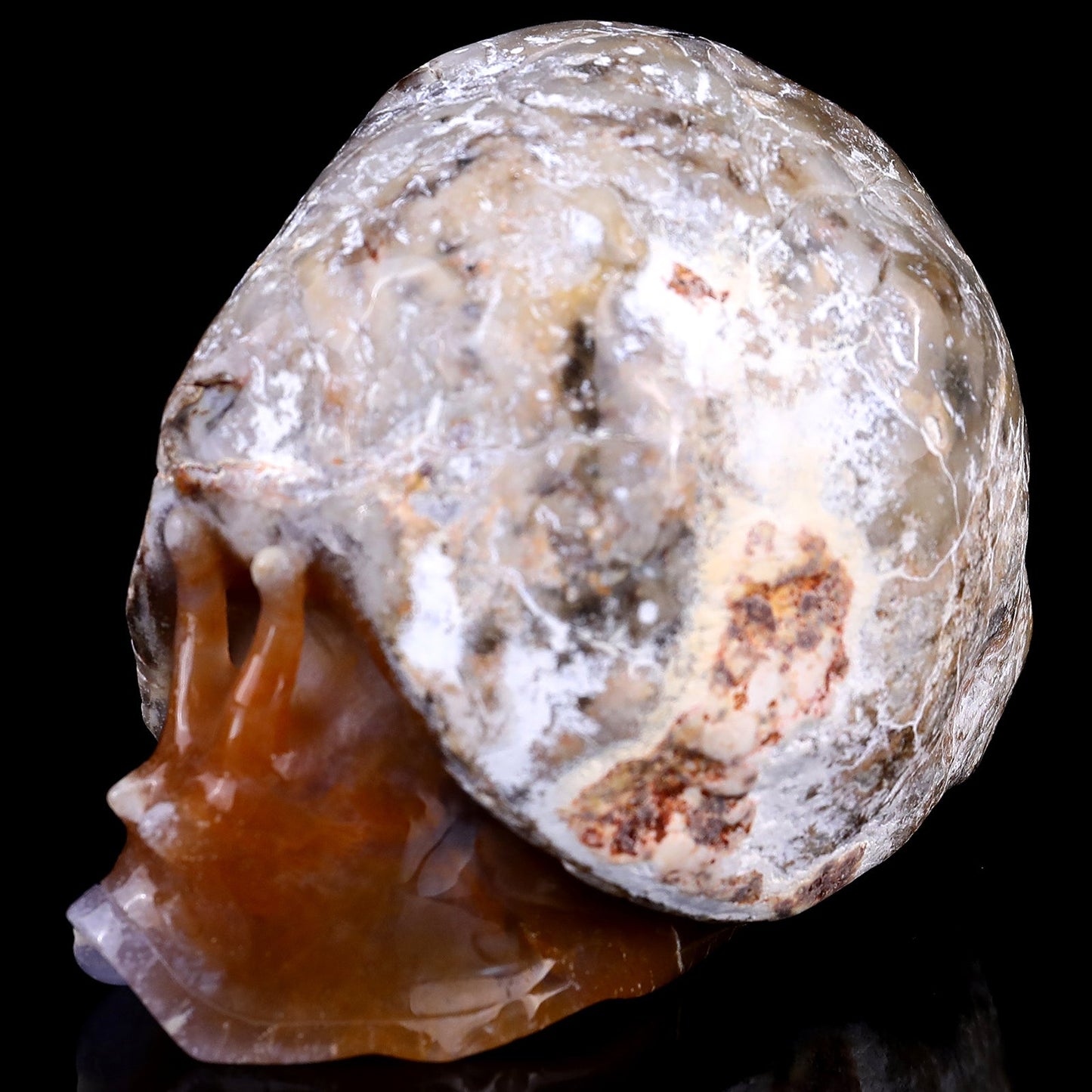
Every carving is cut from its own block of rough. The photographs on this page show the exact piece you will receive — not a sample from the same batch.
Natural stone, untreated
100% natural stone, never dyed or reconstituted. Veins, inclusions and small shifts in colour are how the material formed; they are marks of origin rather than faults.
Carved by hand
Cut, shaped and polished by hand. Proportions differ a little from piece to piece because each one follows the block it came out of.
Checked and packed
Hand-inspected before dispatch and shipped in shockproof packaging.

Confidence on Demand
Traditionally associated with the solar plexus, this stone is believed to support the kind of nerve required before a room rather than after it.
Carry it in a pocket on the day you have to ask for something.

Lifting a Flat Week
Amber-toned stones are traditionally reached for in low light and low seasons, said to hold something of the sun that coloured them.
Set it where the morning light lands first.

Going Somewhere Unfamiliar
Its history as a traveller's amulet is long and well documented. It is believed to steady a person in unfamiliar rooms and among unfamiliar people.
Pack it rather than shelve it.

Keeping at It
Where red stones are traditionally credited with starting things, yellow chalcedony is credited with continuing them — associated with persistence rather than with the initial push.
Keep it on the desk during the long middle of a project.

Why We Carve Animals
Animals in stone are old — older than writing. What a carved animal carries is whatever its own culture gave it: the elephant's memory, the owl's night sight, the bear's patience. The stone lends its own weight to the borrowing.
Keep it in view rather than in storage; these are traditionally companions rather than talismans.